Vedutas from the palace of the Privileged Company of Trieste and Rijeka
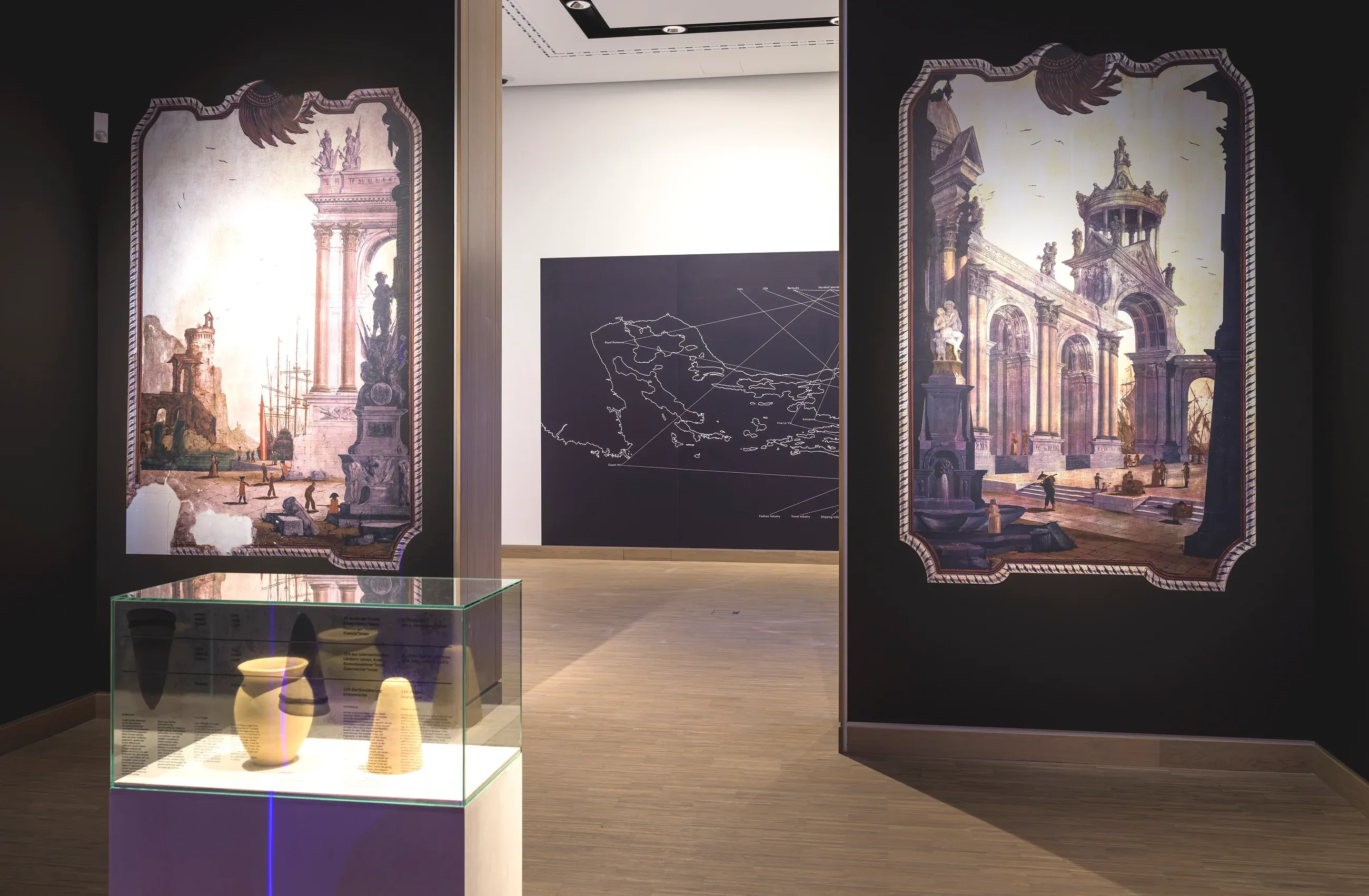
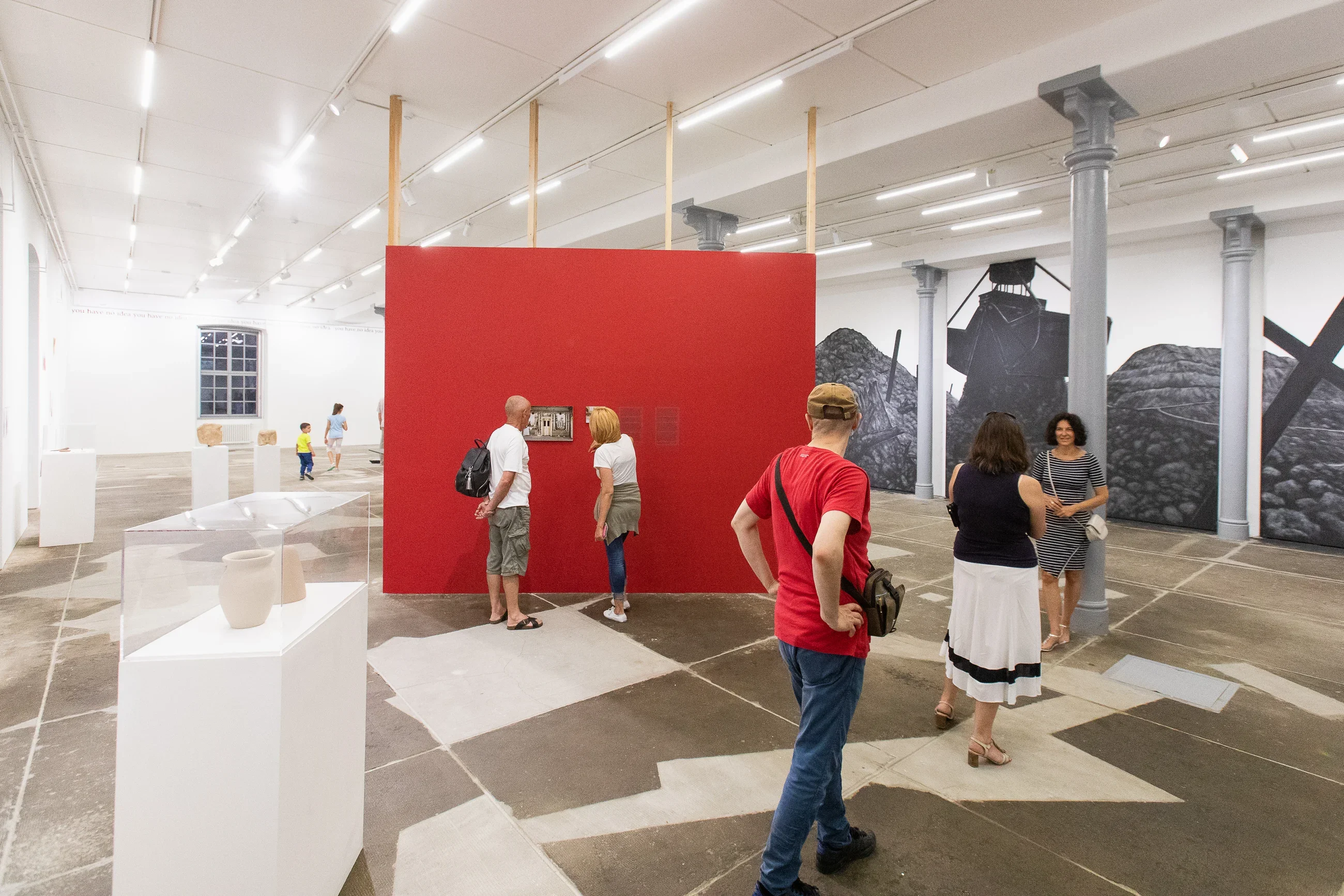
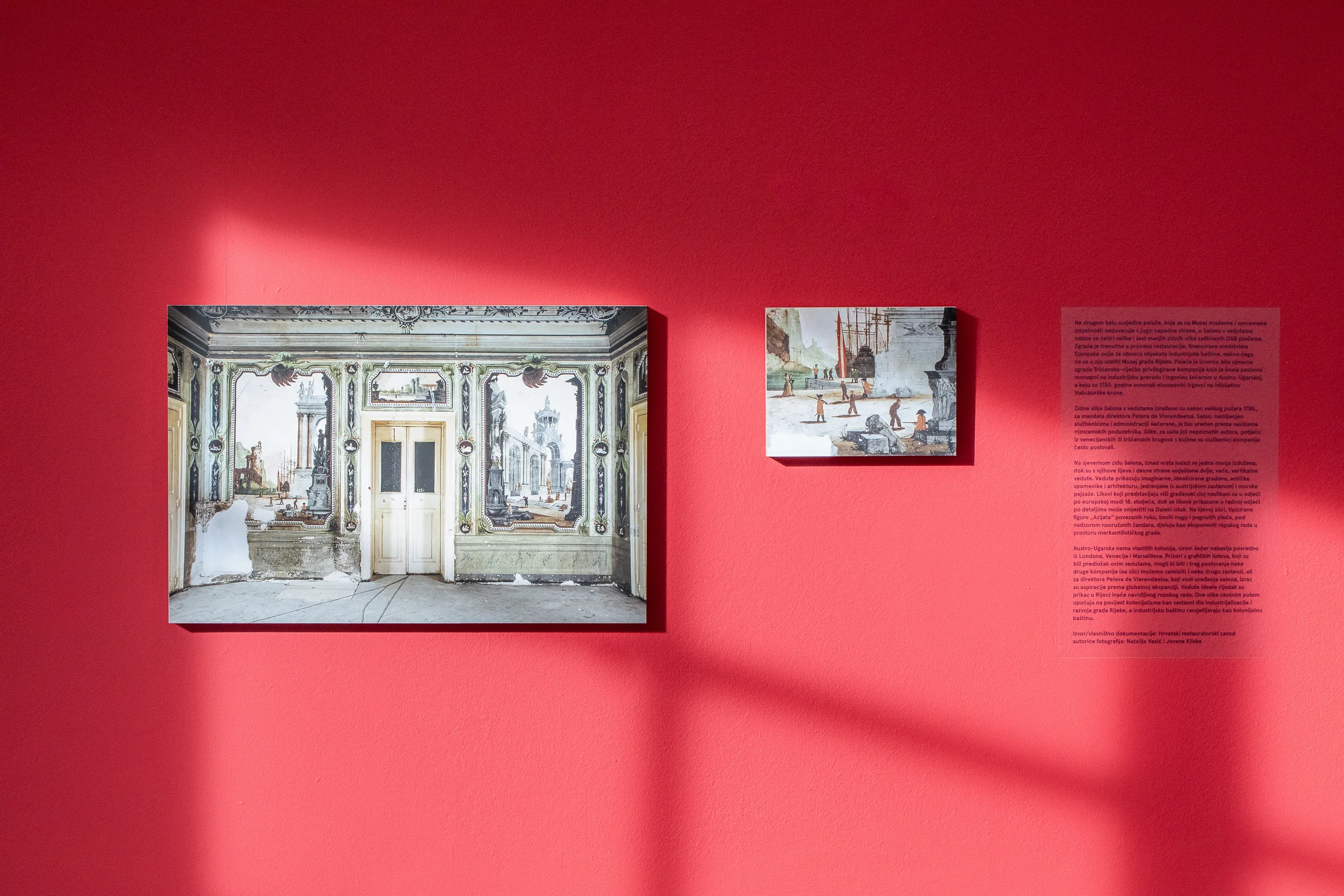
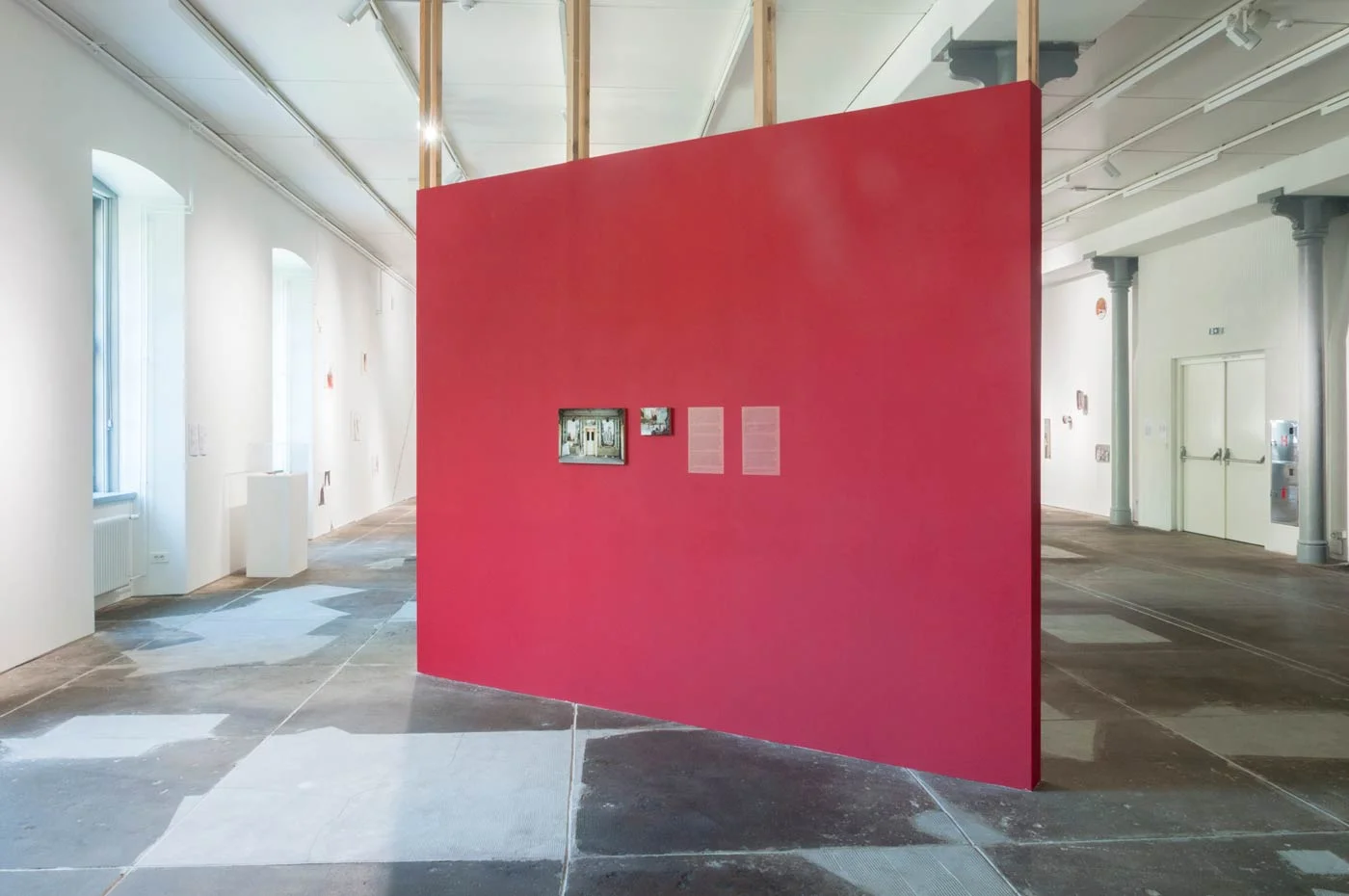
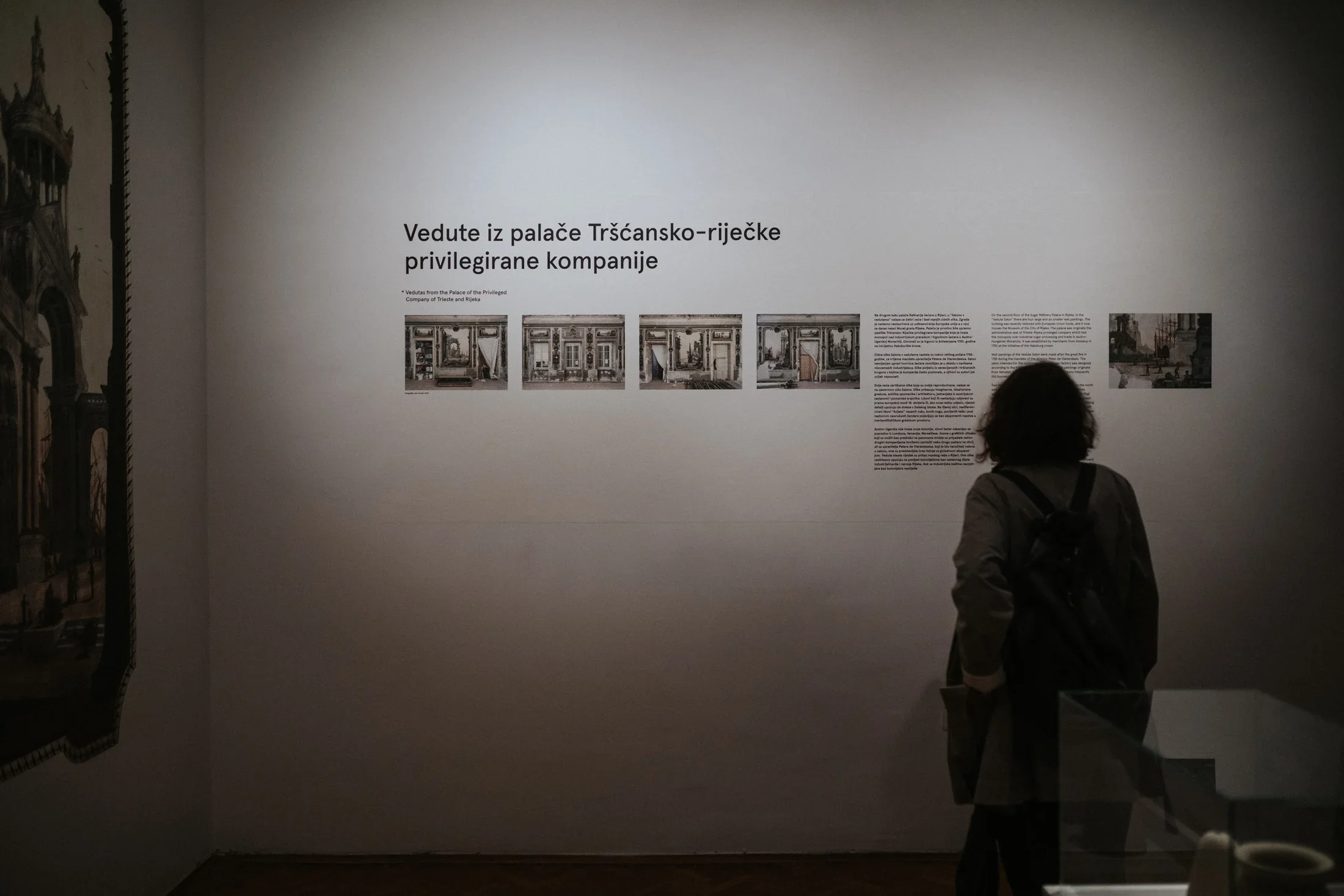
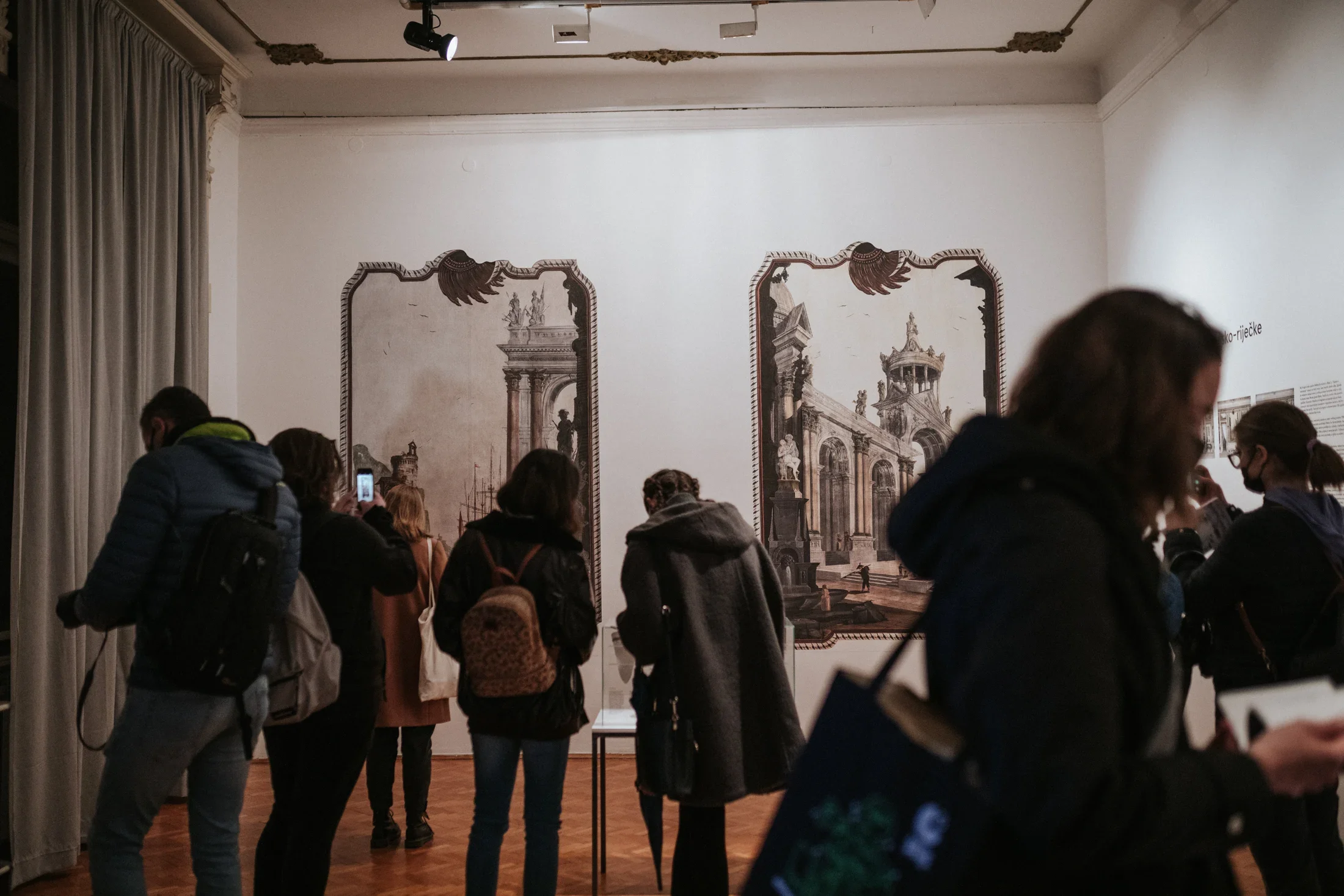
On the second floor of the neighboring palace attached to the south east side of the Museum of Modern and Contemporary Art (opens in a new tab), in the “Vedute Salon” there are four large and six smaller wall paintings protected with OSB boards. The building is being restored with European Union funds for industrial heritage restoration (opens in a new tab). It will house the Museum of the City of Rijeka (opens in a new tab). The palace was originally the administrative seat of Trieste-Rijeka privileged company which had the monopoly over industrial sugar processing and trade in Austro-Hungarian Monarchy. It was established by Dutch merchants in 1750 at the initiative of the Habsburg crown.
Wall paintings of the Vedute Salon were made after the great fire in 1785 during the mandate of the director Peter de Vierendeels. The salon intended for the use of clerks and administration of the sugar factory was designed according to the habits of Dutch industrialists. The paintings originate from Venetian and Trieste circles with whom the company frequently did business, and their authors are still unknown.
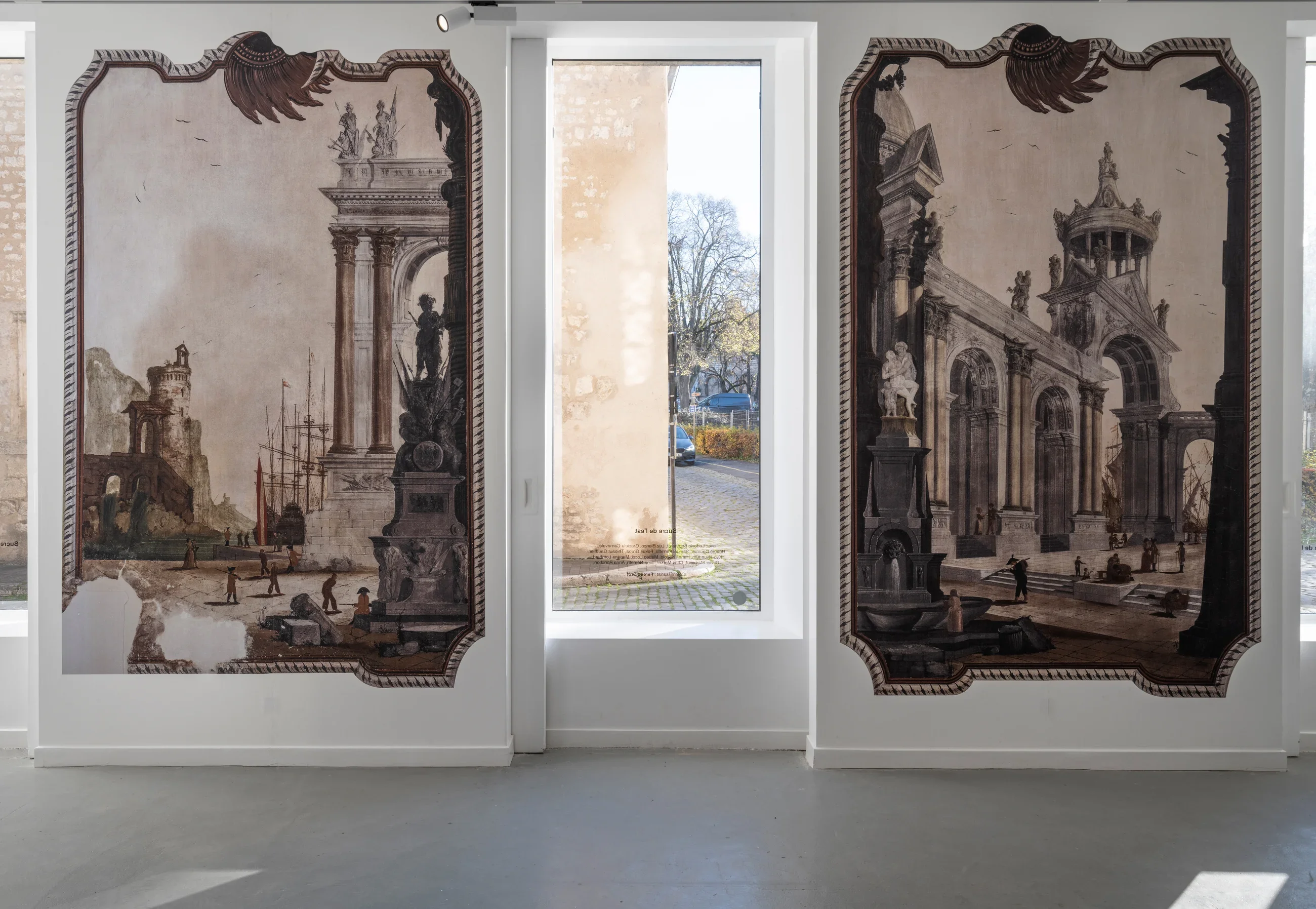
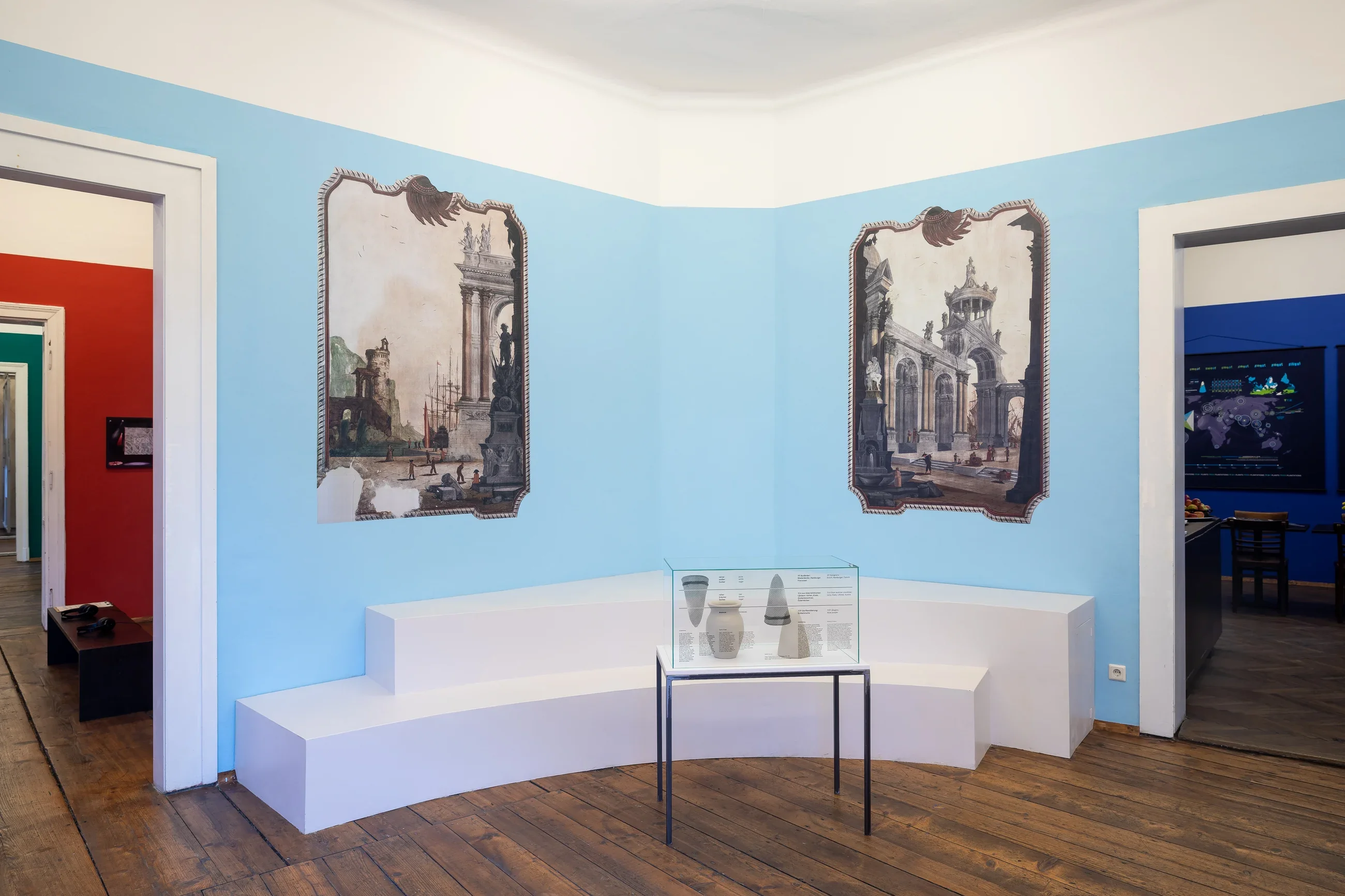
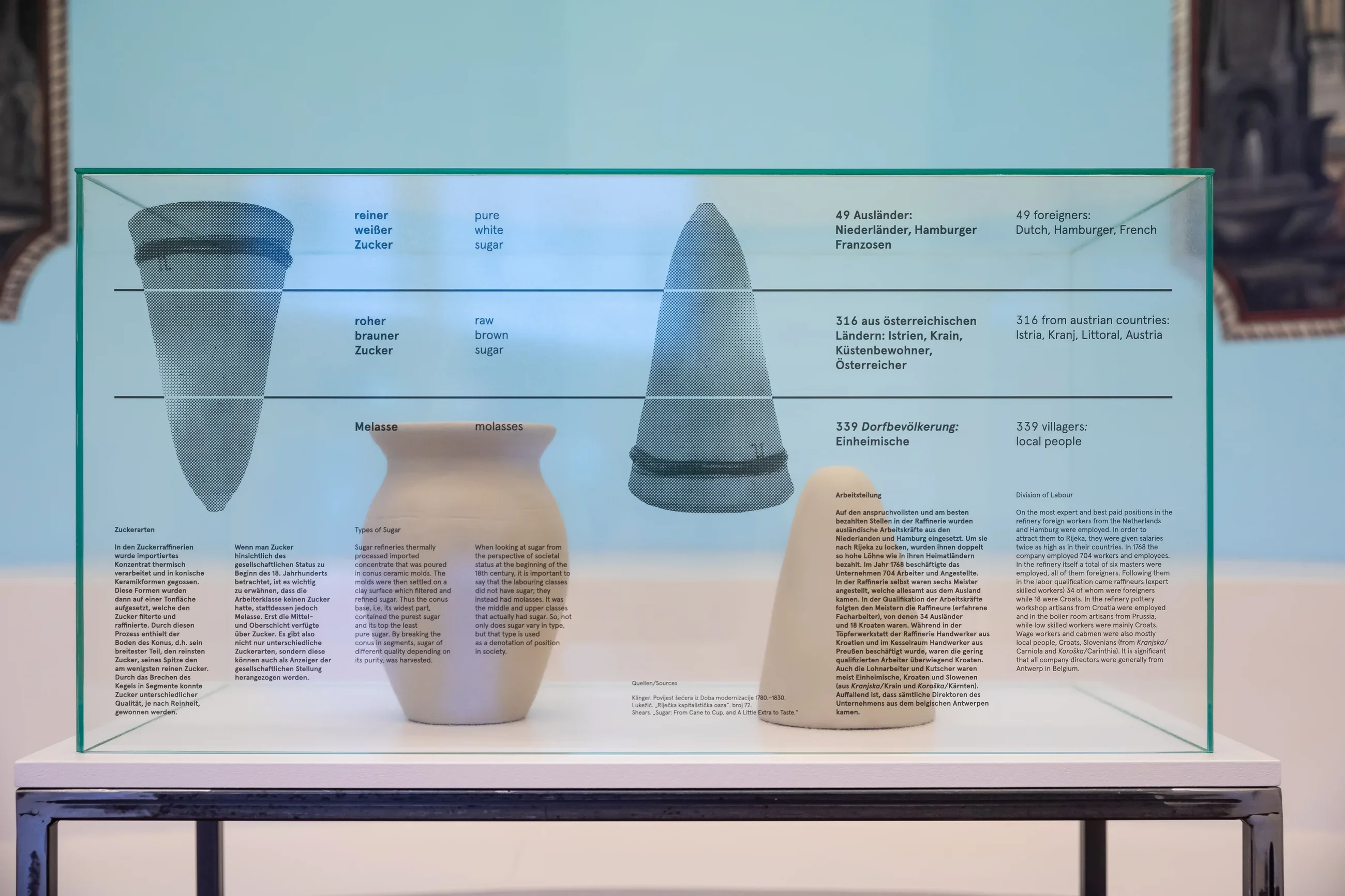
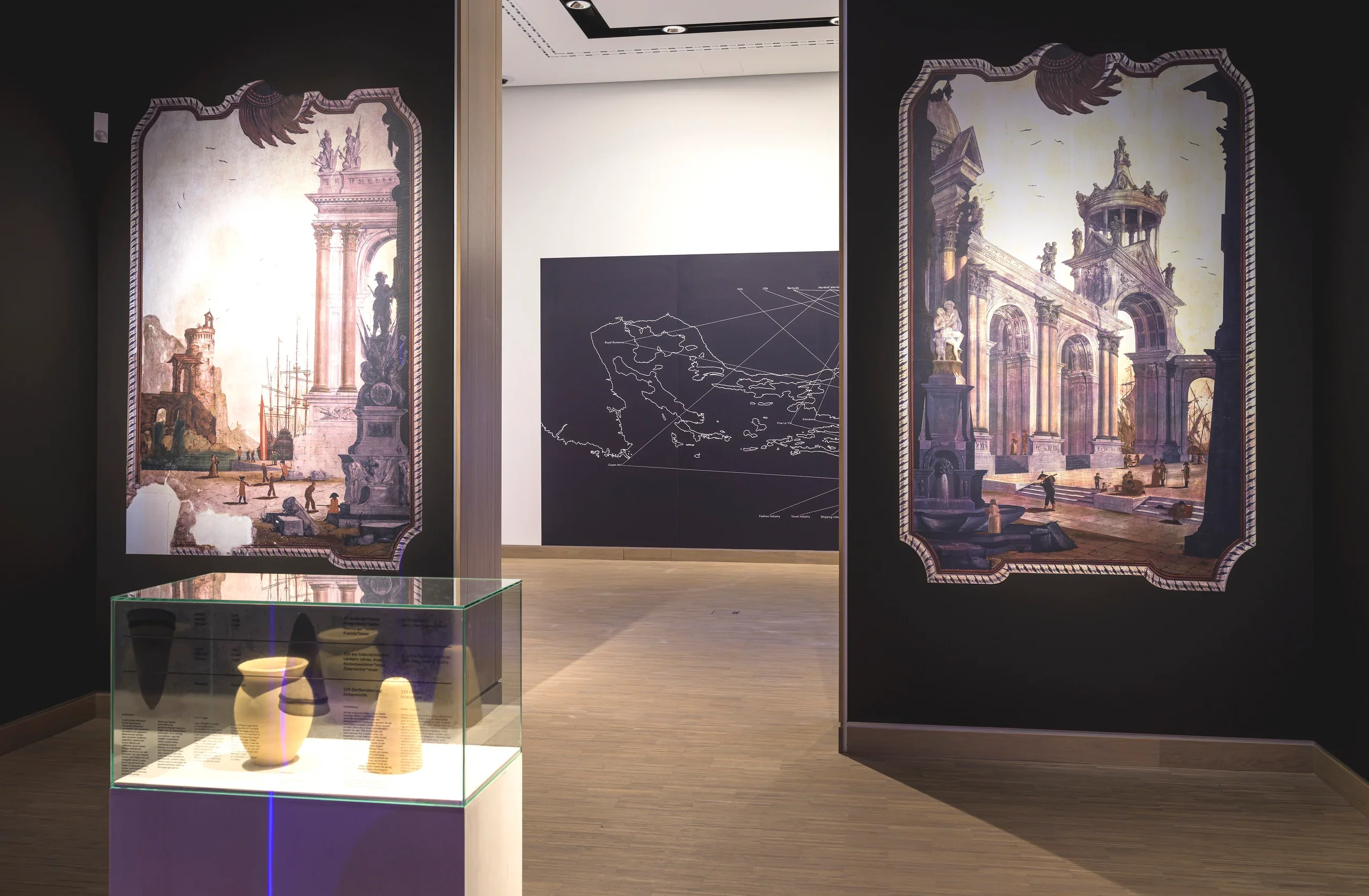
On the north wall of the Salon, above the door, there is a smaller, elongated panoramic view while two larger vertical ones are located on their left and right side. They depict imaginary, idealized cities, ancient monuments and architecture, sailing ships (with Austrian flag) and maritime landscapes. The characters inhabiting them are dressed according to the 18th century European fashion or, if depicted in working clothes, the details imply that they come from the Far East. On the left painting, the undifferentiated figures of “Asians” with bound hands, bare feet and bended backs under the surveillance of armed gendarmes appear as the exponents of slavery in the mercantilist city space.
Austro-Hungary did not have its own colonies, raw sugar was acquired indirectly from London, Venice, Marseilles. The scenes from the graphic prints which were the templates for the panoramas may have belonged to some other companies (we can imagine another flag on the painting), but for the director Peter de Vierendeels who was in charge of the works on the salon, they were an expression of the aspirations for global expansion. The vedute ideale are a rare depiction of slave labor, otherwise invisible in Rijeka. These paintings circuitously point to the history of colonialism as a constituent part of Rijeka’s industrialization and development while industrial heritage is elucidated as colonial heritage.
Details
Project by Fokus Grupa, research assistance by Ivana Lucić (opens in a new tab), based on photo documentation of Vedute Ideale, by Natalija Vasić (opens in a new tab) and Jovan Kliska (opens in a new tab), copyright holder Croatian Conservation Institute (opens in a new tab)
Featured in: Labin Industrial Art Biennial (opens in a new tab), Museum of Modern and Contemporary Art (opens in a new tab), Rijeka — curated by WHW (opens in a new tab) , installation photos by Fokus Grupa
Images
Shown at
- On the Shoulders of Fallen Giants: 2nd Industrial Art Biennial, curated by WHW, Museum of Modern and Contemporary Art, Rijeka, July 21 – September 23, 2018 (opens in a new tab)
- Sucre de l'est, curated by Ferenc Gróf, La Box, ENSA Bourges, November 12, 2020 – January 11, 2021 (opens in a new tab)
- SUGAR: Industrial Heritage and Colonialism, < rotor >, Graz, October 8, 2021 – January 29, 2022 (opens in a new tab)
- Whiteness as Property: Rassismus und Eigentumsverhältnisse, Künstlerhaus, Vienna, February 12 – June 6, 2022 (opens in a new tab)
- Mine, Yours, Ours 2022: Sugar Everywhere, curated by Ferenc Gróf, Drugo more, Filodrammatica, Rijeka, March 31 – April 29, 2022 (opens in a new tab)